
Protein Quality: Amino Acids and Dietary Sources
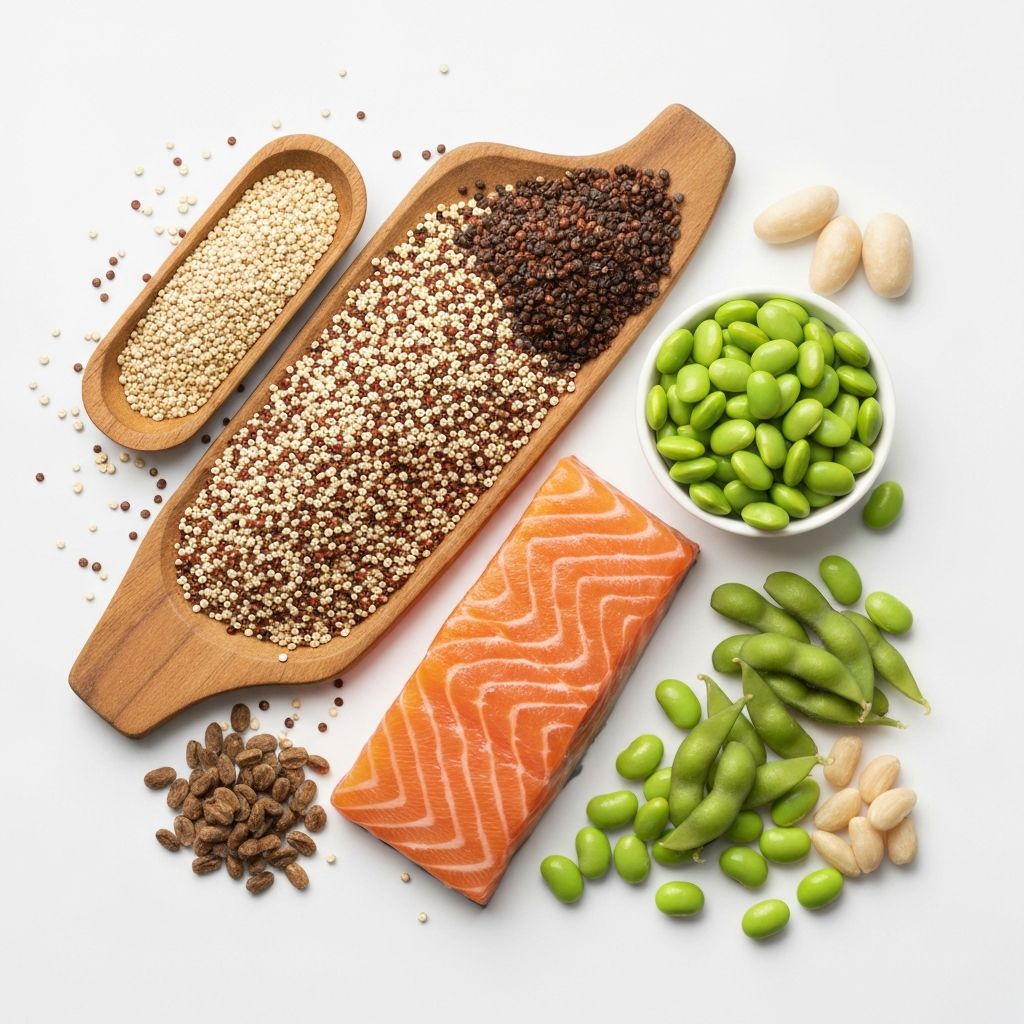
Introduction: Beyond Protein Quantity
While total protein quantity has traditionally received emphasis in nutritional guidance, protein quality—determined by amino acid composition—significantly influences protein's physiological utility. Different protein sources provide substantially different amino acid profiles, affecting their biological value and the physiological functions they support.
Understanding protein quality requires knowledge of essential amino acids, amino acid ratios, bioavailability, and the interaction between protein sources within dietary patterns. This nuanced perspective provides more useful nutritional guidance than protein quantity alone.
Amino Acids: The Building Blocks of Protein
Proteins are composed of amino acids, which are organic compounds containing an amino group, carboxyl group, and distinctive side chain. The human body can synthesize approximately 11 amino acids from other compounds, while 9 amino acids cannot be synthesized and must be obtained from dietary sources. These are classified as essential amino acids.
Essential Amino Acids
The nine essential amino acids are: histidine, isoleucine, leucine, lysine, methionine, phenylalanine, threonine, tryptophan, and valine. These specific amino acids must be provided through diet. Their absence impairs protein synthesis and physiological function.
Adequate intake of all nine essential amino acids is necessary for optimal protein metabolism. Limiting quantities of any essential amino acid restrict overall protein utilization, a concept termed the "amino acid score pattern."
Conditionally Essential Amino Acids
Some amino acids, including glutamine, arginine, and tyrosine, are normally synthesized by the body but become essential during intense physical stress, illness, or specific physiological states. Their availability from dietary sources becomes relevant during these conditions.
Protein Quality Assessment
Complete vs. Incomplete Proteins
Complete proteins contain all nine essential amino acids in sufficient quantities to support protein synthesis. Incomplete proteins lack one or more essential amino acids or contain them in insufficient quantities.
Animal proteins—meat, poultry, fish, eggs, dairy—are typically complete. Many plant proteins are incomplete individually but can be combined to provide complete amino acid profiles across the dietary pattern.
Amino Acid Profile
Beyond completeness, amino acid ratios within proteins vary. The branched-chain amino acids (BCAAs)—leucine, isoleucine, and valine—have particular relevance to protein synthesis stimulation, with leucine demonstrating particular importance as a signaling molecule.
Different protein sources provide different BCAA content and ratios. This variation influences the protein synthesis response to protein consumption and overall metabolic effects.
Digestibility and Bioavailability
Protein quality assessment must account for digestibility—the proportion of dietary protein that the body absorbs. Processing, cooking, and food matrix composition affect protein digestibility. The PDCAAS (Protein Digestibility Corrected Amino Acid Score) and newer DIAAS methods incorporate digestibility into quality assessment.
Heat processing generally increases digestibility of plant proteins, while some food preparation methods can reduce bioavailability of specific nutrients alongside proteins.
Animal-Based Protein Sources
Fish and Shellfish
High in protein with favorable omega-3 polyunsaturated fat ratios. Generally provide complete amino acid profiles with high biological value.
Poultry
Lean protein source with minimal fat content. Provides complete amino acid profiles and complete protein with high digestibility.
Eggs
Considered a reference protein for amino acid quality assessment. Provide complete proteins with exceptionally high biological value and diverse micronutrients.
Dairy Products
Milk, yogurt, and cheese provide complete proteins alongside calcium and other minerals. Varying fat content depending on product selection.
Beef and Red Meat
Complete proteins with high micronutrient density including iron, zinc, and B vitamins. Variable fat content depending on cut selection.
Plant-Based Protein Sources
Legumes
Beans, lentils, chickpeas, and peas provide substantial protein with fiber and micronutrients. Individually, legumes are often incomplete, limiting in methionine. Combined with grains, which limit lysine, legumes and grains provide complementary amino acid profiles achieving complete protein combinations.
Whole Grains
Grains like quinoa, oats, brown rice, and whole wheat provide moderate protein with additional carbohydrates and micronutrients. Most grains are incomplete, limiting lysine. Combined with legumes, grains contribute to complete protein patterns.
Nuts and Seeds
Nuts, seeds, and seed butters provide protein, healthy fats, and micronutrients. Generally incomplete individually, though some seeds like pumpkin seeds provide higher quality protein profiles.
Soy Products
Tofu, tempeh, and edamame provide complete proteins with all essential amino acids. Among plant sources, soy represents one of the highest quality protein options from an amino acid composition perspective.
Protein Complementarity and Dietary Patterns
While individual plant sources may be incomplete, thoughtful combination across dietary patterns achieves complete amino acid provision. The traditional combination of grains and legumes—rice and beans, for example—represents complementary protein combinations that together provide complete amino acid profiles.
This principle allows vegetarian and vegan dietary patterns to achieve adequate protein quality when planned appropriately. Variety in plant protein sources across the day supports comprehensive amino acid provision.
Protein Quality Matrix
| Protein Source | Quality Rating | Amino Acid Profile | Additional Benefits |
|---|---|---|---|
| Eggs | Excellent | Complete, all essential amino acids | Choline, lutein, diverse micronutrients |
| Fish | Excellent | Complete, balanced amino acids | Omega-3 fatty acids, vitamin D |
| Soy | Very Good | Complete plant source | Isoflavones, minimal processing option |
| Legumes | Good (combined) | Incomplete individually, complementary with grains | Fiber, minerals, phytonutrients |
| Grains | Fair (combined) | Incomplete individually, complementary with legumes | B vitamins, fiber, minerals |
Protein Intake Optimization
While total protein quantity receives emphasis, achieving diverse amino acid profiles through varied sources optimizes nutritional provision. This approach naturally supports broader nutritional completeness beyond protein itself.
Individual optimal protein intake varies based on age, activity level, and physiological state. Variety in protein sources supports optimal amino acid provision and related micronutrient intake.
Conclusion
Protein quality, determined by amino acid composition and bioavailability, significantly influences protein's physiological utility beyond simple quantity. Understanding amino acid profiles, essential amino acids, and protein quality assessment tools provides more nuanced nutritional perspective. Both animal and plant sources can support adequate protein intake when selected and combined appropriately. This complexity underscores why nutritional guidance requires consideration of food quality, not merely macronutrient quantity.